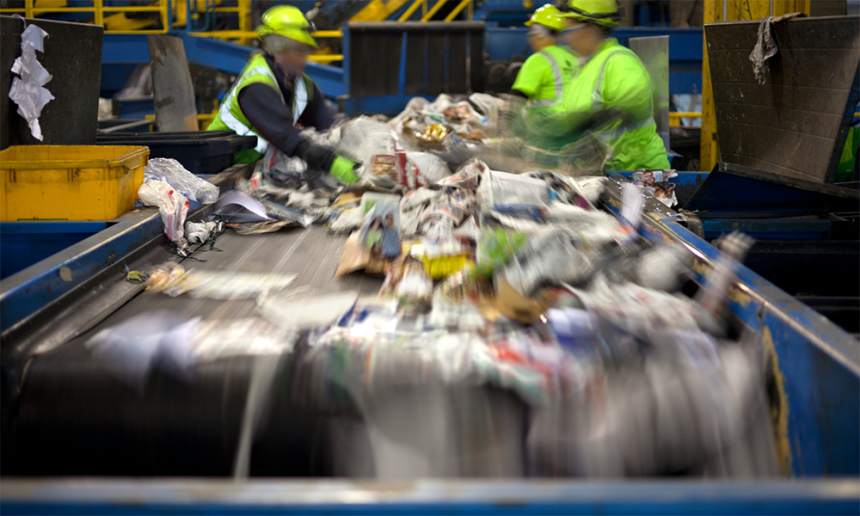
A report produced by CIWM’s Infrastructure, Services and Operations Specialist Expert Group says UK sorting facilities could lose valuable material while continuing to bear costs for drinks containers collected outside the deposit return system.
The Chartered Institution of Wastes Management’s (CIWM) Infrastructure, Services and Operations Specialist Expert Group has called for clarity over how drinks containers that bypass the deposit return scheme (DRS) will be identified and funded.
Its report, Can UK MRFs Survive Packaging Reform?, examines the combined effects of DRS, packaging extended producer responsibility, Simpler Recycling and other policy changes on materials recovery facilities (MRFs).
DRS is due to launch on 1 October 2027. In England and Northern Ireland, it will cover single-use PET plastic, steel and aluminium drinks containers between 150ml and three litres.
The government says the scheme will reduce litter, improve recycling rates and create higher-quality recycled material.
The expert group said DRS would redirect valuable aluminium cans and PET bottles from commingled recycling into dedicated return routes. However, some eligible containers are expected to remain in kerbside, commercial and litter collections.
Councils and MRF operators could therefore continue paying to collect and sort those containers without a settled mechanism for recovering their costs. The report calls this unresolved interface the “MRF gap”.
Its illustrative modelling suggests that between 10% and 30% of material could leave the example commingled stream, depending on assumptions about DRS participation and separate fibre collections.
The group stressed that this is not a national forecast. The analysis uses operating data from one anonymised facility, and the effects will vary according to material composition, contracts, commodity prices and collection systems.
The report also warns that removing aluminium drinks cans could change the composition of remaining metal outputs. In one operator scenario, the proportion of aerosols increased from about 2% to 9%, raising questions about classification, permitting and treatment.
The group said the example does not mean the resulting material would automatically be hazardous. It nevertheless called for coordinated guidance from environmental regulators before DRS begins.
Other pressures include changes to paper and card collections, the future introduction of plastic-film collections and uncertainty over carbon costs for waste incineration.
“Survival should not be confused with remaining economically unchanged,” the report said.
The expert group recommends resolving DRS funding and reconciliation arrangements before October 2027, assessing the cumulative effect of the reforms and recognising MRFs as critical environmental infrastructure.
